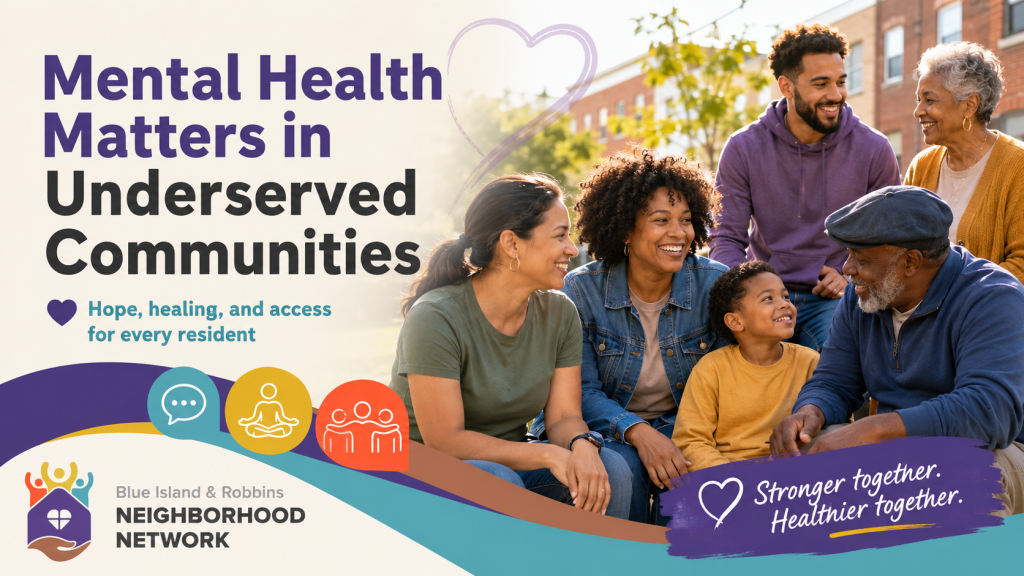
Mental Health Matters in Underserved Communities
Mental health is an important part of a strong and healthy community. In underserved communities, mental health challenges are often connected to more than one issue. Families may be dealing with stress from housing, finances, violence, grief, food insecurity, health concerns, or lack of access to care. When those pressures build up over time, they can affect a person’s emotional, physical, and spiritual well-being.
The need for mental health support is real. Cook County Health reported that in 2023, more than 1.2 million people in Cook County needed behavioral health services, but about 420,000 did not receive them. Recognizing this shared challenge can inspire a feeling of collective responsibility and motivate action.
One major barrier is access. Some people cannot find a provider close to home. Others may not have insurance, transportation, childcare, or money for the cost of care. KFF reported that in 2024, nearly four in ten uninsured adults delayed, skipped, or went without needed care or medication because of cost. This shows why mental health must be talked about as a community issue, not just an individual issue.
Another challenge is the shortage of behavioral health workers. Cook County has reported that the behavioral health workforce needs to grow by 50%, with nearly 30,000 additional behavioral health professionals needed by 2028. When there are not enough providers, people wait longer for care, and some people never receive care at all.
Mental health also carries stigma in many communities. Some people were raised not to talk about depression, anxiety, trauma, or emotional pain. But asking for help is a sign of strength, wisdom, and courage-an empowering step that can transform lives.
As Program Manager of the Blue Island–Robbins Neighborhood Network, I believe mental health must be part of our larger conversation about community wellness. When we come together to create spaces where residents feel seen, heard, supported, and valued, we build strength and resilience in our community.
BIRNN’s work is rooted in partnership and community voice. We know that no single organization can meet every need alone. Community engagement strategies such as town hall meetings, mental health fairs, and peer-led workshops can help connect residents with support. It takes residents, schools, churches, healthcare providers, nonprofits, local government, businesses, and community leaders working together to reduce barriers and connect people to support.
Mental health in underserved communities must be addressed with compassion, dignity, and action. That means listening to residents, sharing resources, supporting youth and families, reducing stigma, and building stronger connections across the community.
When we support mental health, we support families. We support students. We support workers. We support seniors. We support the whole community.
Together, we can continue building a community where people do not have to suffer in silence and where asking for help is respected, supported, and encouraged.